
The Difference Between SEO and GEO: A quick run-down
The difference between SEO and GEO is not so much night and day, as it is about 10:30am and 3:45pm. They have their differences, but they occupy the same space, is what I'm saying.
Until recently, search engine optimisation – or SEO – has been the industry standard when it comes to online content. While this isn't going away, a new player is shaking things up: GEO. Generative engine optimisation is essentially a way for AI search to summarise content from websites that answers queries, showcases author expertise, and, ultimately, improves brand visibility.
I can already sense people reaching for the close-tab X at the top, but this is a discussion that needs to happen, especially if you run a business website. I know that gen-AI is not everyone's favourite "buzzword" right now. There are genuine concerns about how artificial intelligence could have a significant impact on the UK job market. That likely includes the work people like me do.
However, I think there's something to be said for being both optimistic and cautious. AI has its uses, and as we begin 2026, it's already changed the way search engines like Google show results and information to users. As such, it's important to at least know what we're dealing with.
So what is GEO, then?
In a nutshell: generative engine optimisation works differently to search engine optimisation. The latter has a focus on backlinks, relevant keyword distribution, the quality of written content, and additional background metrics, such as page load speeds.
GEO, on the other hand, puts emphasis on satisfying sophisticated search queries extracted by AI-driven tools. As more and more people make use of things like ChatGPT and Google's Gemini, the need for businesses and experts to show up in AI search summaries becomes greater.
A Pew Research article showed that one in five search queries appeared in an AI summary back in March 2025. That number is only going to get higher and GEO tactics will increase in demand.
However, it's worth pointing out that AI search is probably not going to take over traditional Google searches for the time-being. At least according to a report from SEO.com.
But what's so special about GEO?
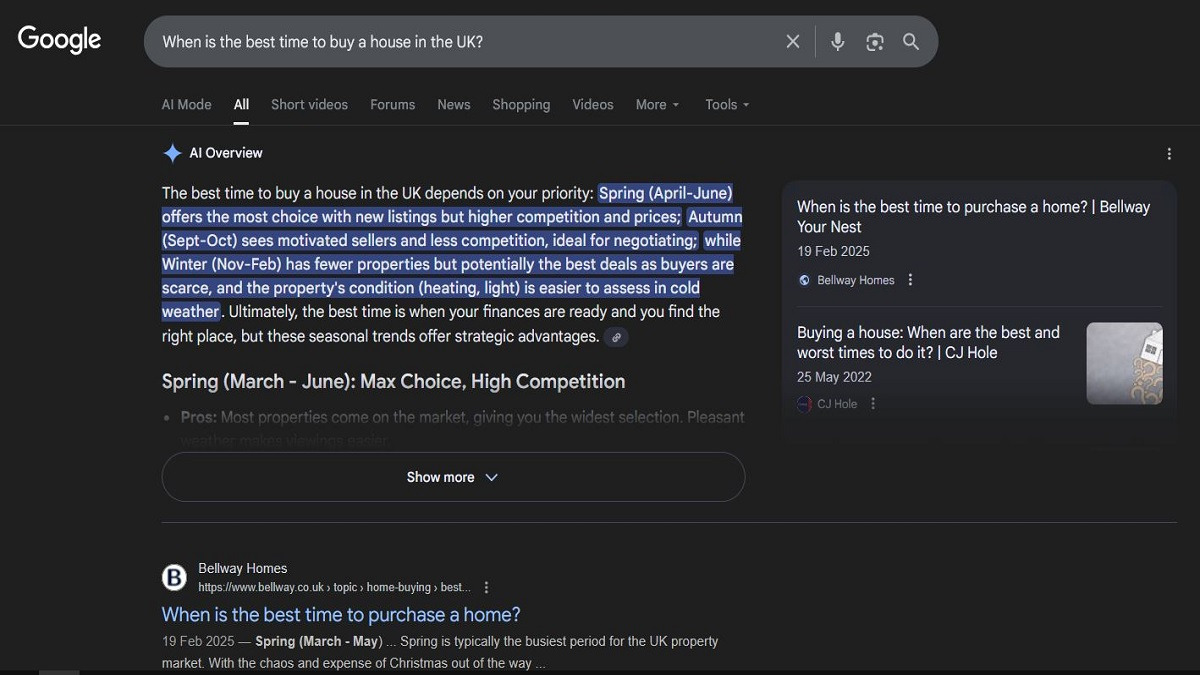
Take a look at the screenshot above. It's something we're all familiar with these days. It shows an AI summary for the search term "When is the best time to buy a house in the UK?" This is what's happening when we talk about generative engine optimisation.
Before giving you a list of links, ranked in order of relevance (that's SEO at play), Google summarises what it believes is the right answer for me that's been pulled from a specific website. It's generated this result by extracting the information from what AI says is the most relevant answer to my query.
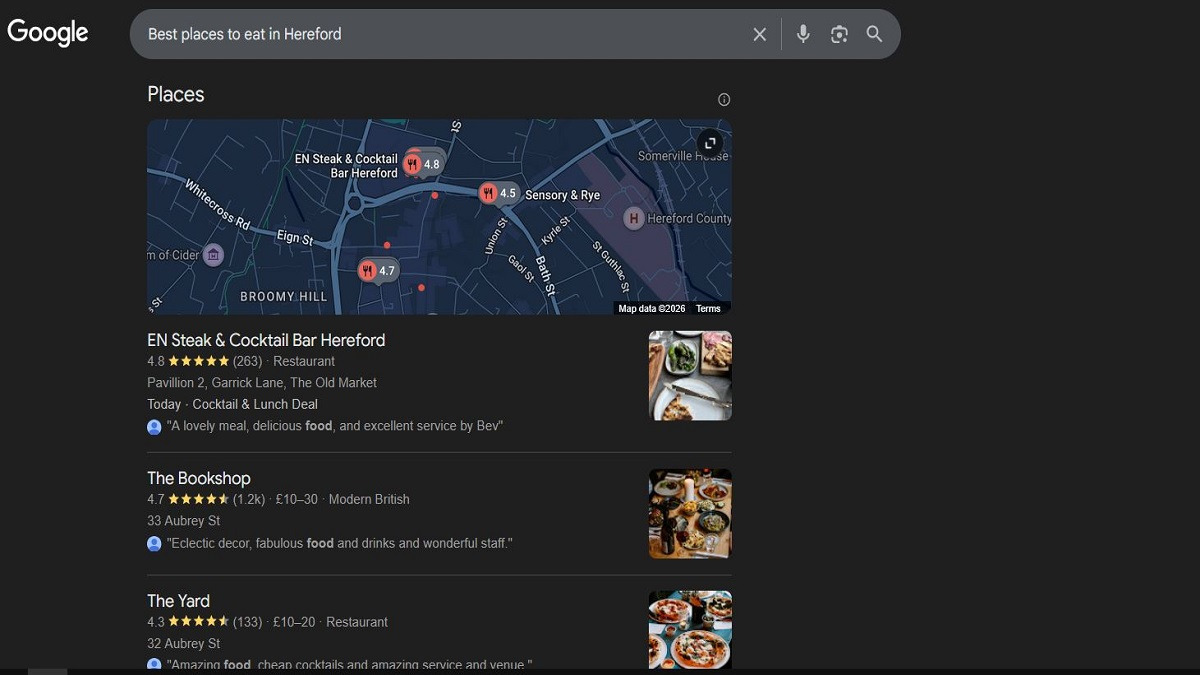
Compare that to the screenshot below, which prioritises a list of businesses that match the search term "Best places to eat in Hereford" (a fruitless endeavour, because I already know it's the Beefy Boys). It's still a useful result, but it differs from AI search, in that I'm given a list of possibilities, but need to do more clicks in order to find what I'm after.
Is GEO replacing SEO?
It's tempting to say that the new guy in town has replaced (or will replace) traditional search queries. This isn't necessarily the case. In fact, many digital marketing experts strongly recommend utilising both SEO and GEO tactics in any online content campaign.
Backlinks, keywords, page load speeds, and technical optimisations are still important when it comes to maintaining visibility in search engines. But with GEO, there's a focus on answering deeper questions and more advanced queries so your content appears in AI summaries at the top of the page.
This means articles and blogs need to engage in a kind of pas de deux, a digital marketing ballet, if you will (I cannot believe I just said that). The twin tactics of showcasing expertise in your particular field or industry while also ensuring top-notch optimisation techniques we all know and love (right?) will work in tandem to keep your business website ahead of the curve.
As generative AI becomes much more of a focal point in the digital world, it's up to businesses to optimise their websites and structure their content in a way that compliment each other.
If this is something you'd like some help with, check out the services I offer or contact me to set up a quick chat.
0 Comments Add a Comment?