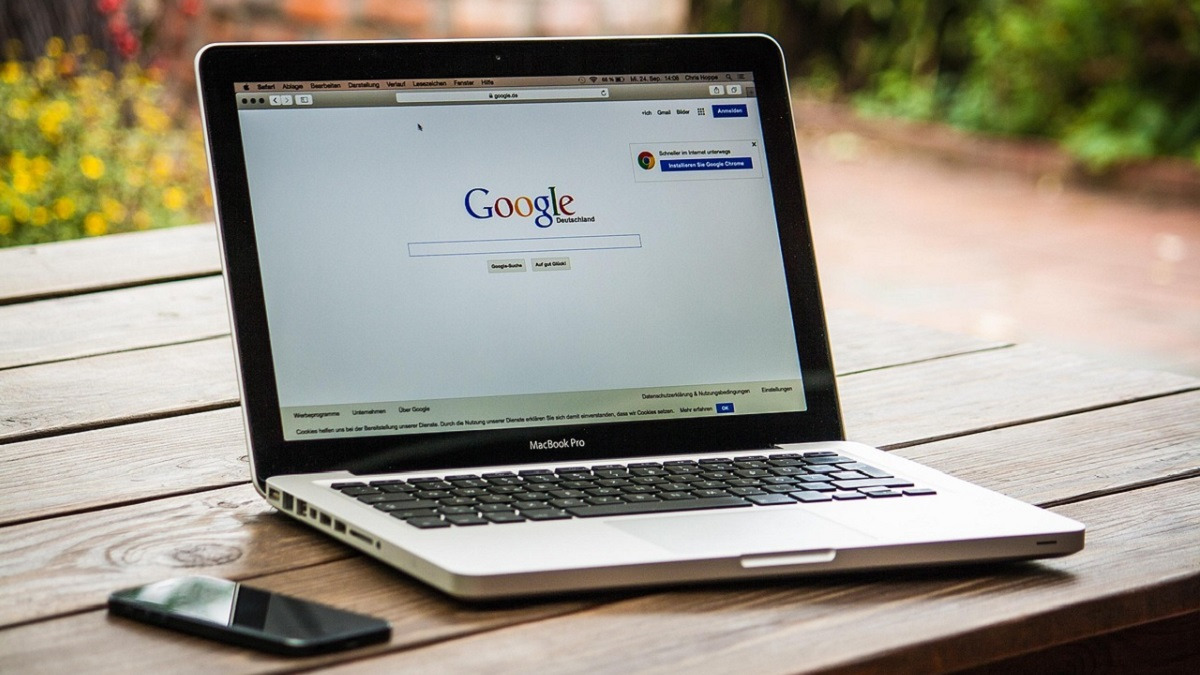
Does your business need SEO? Yes. Yes it does.
Okay. Good hustle everyone. Drive safe.
Wait. You want more? Fine.
Look, if you're a business taking up space on the interblags – whether you're new or, I dunno, Amazon – optimising your website is a pretty vital part of your operations.
Obviously, you've got your customers and clients to think about. They're probably your number one priority. But given that a lot of commerce takes place online these days, it ain't worth a hill o' beans if no one can find you on Google.
When people input a query into a search engine, there's a reason why certain results are shown first.
The people (or, perhaps, their marketing department) behind the websites that appear at the top have done the legwork to make sure a business shines like a star on a Christmas tree (it's still December, right?)
SEO is not just some "fad"

Depending on who you ask, there's an argument to be made that search engine optimisation can be traced back as far as the mid-1990s.
That makes SEO as old as Google, which, to some of us, is quite the striking thought; how can something exist before the very website that many associate it with? It's a head-scratcher, innit?
In any case, it goes to show that ensuring a website is properly optimised so people can find it is not a new concept. Just the methods keep changing.
We wouldn't be having this discussion now if it was a "get rich quick" scheme or some kind of fashionable craze, like that spinning doohickey the kid in the above picture is holding.
Imagine if, say, in the 1980s or so, you had a business, but you decided you weren't interested in having a phone number; how do you think everyone would react?
For people back then – with their wide shoulder pads and obsession with New Wave – who may be looking for a particular service or product, not being able to contact a company for information is a bullet straight to the foot of your business.
It's the same with SEO; if you're not optimising your website so people can seek you out on search engines, you're missing out on potential.
If you run a business that sells sparkly horse manure and I can't find you online via the search term "sparkly horse manure," it's less to do with your rather niche product, and more to do with what's happening with your web content.
These are stone-cold facts, yo.
What if I don't need SEO?

The very best of luck to you. I don't mean that in any passive-aggressive way. I mean, if your business can succeed in the digital age with no SEO strategy in-place at all, please write a book. You will make millions.
I know it's not always a popular topic of discussion, especially now that we're in the age of generative AI. But having a business website warrants more than just a simple upload to a hosting service and letting nature take its course.
There's a lot of backend and frontend work that goes into making sure your content is well-structured, answers queries people may have, and points to you as a business to be trusted.
To that end, yes, you absolutely need SEO for your website.
"But Andrew, you smooth-talking, devilishly rakish Adonis who does not at all have questionable fashion tastes," I hear you say, "surely you, someone advertising an SEO and writing service, would say that."
Naturally. And what astute observation skills you have, dear reader.
Yes, of course I'm going to talk about the importance of optimising your web content when it's a service I offer. But it's worth pointing out that I didn't decide to go into this industry and then have to work out how to defend it.
The strategies and tactics that SEO is known for do work, and it's likely that many people out there are not aware of how important it is. That's precisely why I'm here right now.
Okay, I'm down - what now?

SEO is something that all businesses should be considering, whether you're new to the scene or you're some sort of massive corporation (evil doings are optional).
If you've made it this far and your chin is red and sore from all that contemplative scratching, you may be wondering where you go from here.
It's important to note that website optimisation is not a "one and done" situation. Things change. Like, all the time. And websites can easily get penalised for not updating their strategies.
If you're a brand-spanking-new company, then it will mean starting with a blank slate. You'll first need a website (natch). If you're not sure how to go about building one, there are people who dedicate themselves to web design.
From there, it really depends on your budget and your capacity for content. Do you want one blog post a month or one a week? Do you want a detailed audit to check the overall "health" of your website, or just the basics?
What about keyword research? Do you want to know why people are clicking on your competitor's websites rather than yours?
Do you also have products that need detailed and optimised descriptions so people know what it is you're selling?
These are things to consider, plus several more.
Seriously, though, if you're still reading, I am eternally grateful to you for sticking around. There are a lot of shady SEO tactics out there – and people who want to exploit that – so I completely understand a business (especially a new one) may be apprehensive about hiring someone like me.
But if I've tickled your fancy, even by just a few iotas, do hit me up. I'm just looking to offer a service in as genuine and honest a way as I can. Much like yourselves.
But for the record: my fashion sense is not that atrocious.
Post a comment